
Driver Tips
How to Calculate Your Break-Even RPM (And Why Every Owner-Operator Must Know It)
6 min readRead
Both equipment types have strong lanes — but the numbers tell different stories depending on your region, season, and operating costs. Here's a data-driven breakdown.
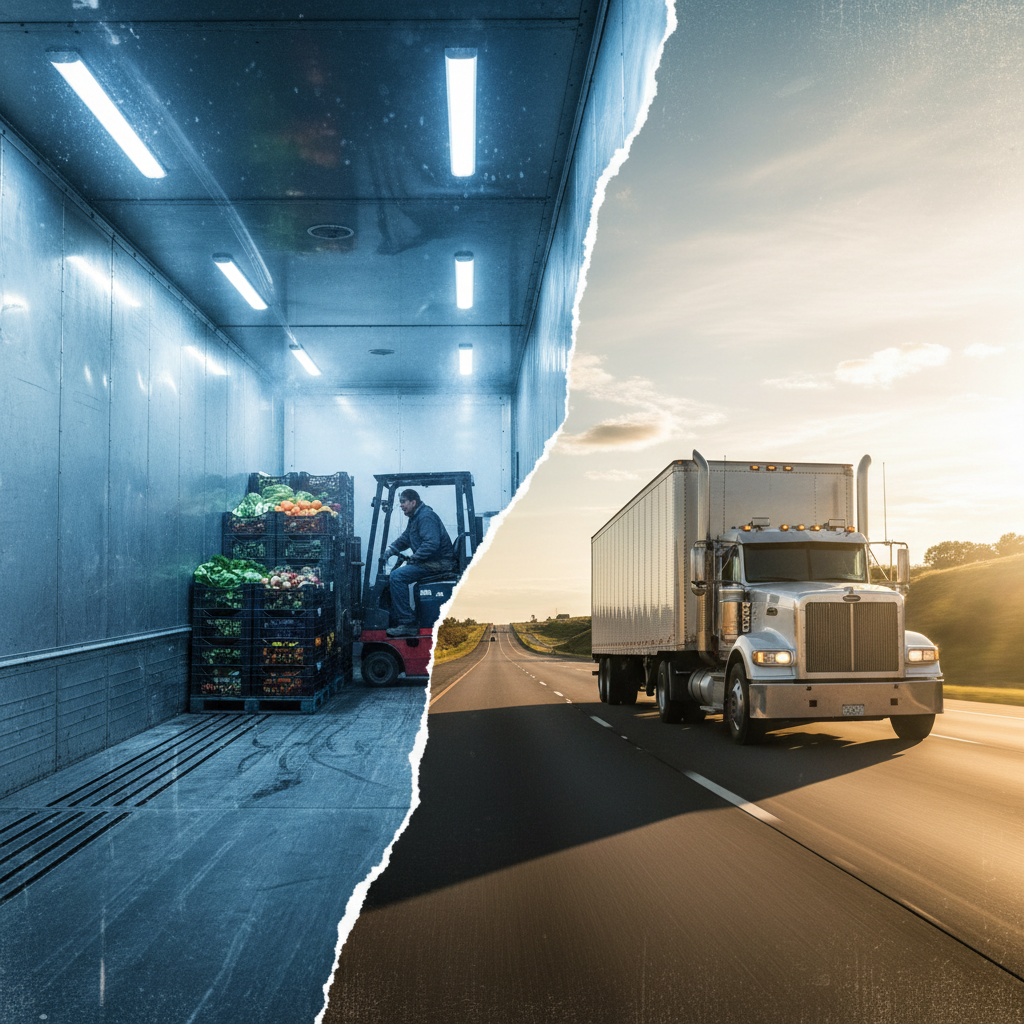
The reefer vs. dry van debate comes up constantly in owner-operator circles, and the honest answer is: it depends. Both equipment types can be highly profitable. Both can be money pits if you're running the wrong lanes at the wrong rates. What matters is understanding the cost and revenue profile of each — and matching that to your operating situation.
Reefer units command higher rates. In 2026, the national average spot rate for reefer freight is running approximately $0.25 to $0.40 per mile higher than dry van on comparable lanes. That premium exists because temperature-controlled freight is more complex, more time-sensitive, and requires specialized equipment that not every carrier has.
But reefer also costs more to operate. The refrigeration unit burns fuel — typically 0.5 to 0.8 gallons per hour at idle, and more under load. On a 10-hour transit, that's an additional 5 to 8 gallons of diesel on top of your tractor fuel. Reefer units also require more maintenance: compressor service, refrigerant checks, pre-trip inspections that take longer, and a higher repair cost when something goes wrong.
Dry van has lower operating costs and simpler operations. You don't have to worry about temperature logs, pre-cooling, or reefer breakdowns mid-transit. The freight is less sensitive, which means fewer claims and less stress. The tradeoff is lower rates on most lanes and more competition — there are simply more dry van carriers than reefer carriers.
Seasonality matters significantly for reefer. Produce season (spring through early fall) drives reefer rates up sharply in agricultural corridors — California, Florida, the Pacific Northwest. Winter brings pharmaceutical and food distribution freight that pays well year-round. Dry van is more consistent across seasons but doesn't have the same rate spikes.
The bottom line: if you're running Southeast to Midwest corridors, reefer typically wins on net profit after costs. If you're running general freight in the Midwest or Northeast, dry van can be equally profitable with lower operational complexity. The best move is to run the numbers on your specific lanes, your actual fuel costs, and your maintenance history — not national averages.
At Freight Fore Dispatch, we work with both reefer and dry van carriers. We build your lane strategy around your equipment, your home base, and your cost profile — not a one-size-fits-all approach. The goal is always the same: maximize your net RPM, not just your gross rate.
Put It Into Practice
Flat 7% dispatch fee. No long-term contracts. We handle the negotiation, paperwork, and broker vetting so you can focus on the road.
More Articles